Thursday, February 15, 2007
Tuesday, February 13, 2007
Journey to the West (Santa Cruz)
(Continuation of Topanga Canyon)
My destination on the West coast was my friend Høne who was living in Berkeley with her husband, Chris, and their kids Thor and Amrit, whose birth in Sweden I had attended. They were part of the Vajrapani group who also included a retreat center in Boulder Creek in the Santa Cruz Mountains.
I was running out of my three months visa, but when I asked for an extension it was denied. I was too content being in America, being, in fact, where the whole hippie revolution had started and was still very alive, so I had no intension of leaving. This became the beginning of ten years as illegal alien.
We went to Boulder Creek to visit the retreat center. The last two miles were dirt road and it was slick with about six inches of soupy mud and the car was sliding along dangerously near the creek, but we got through. The retreat consisted of a few cabins and tepees hidden at the end of the road, deep in the redwoods. It was very new; the land had been given only a year before to create a center for Lama Yeshe and Lama Zopa.
It was a lovely place and I was eager to move there, but first I had things to do in Berkeley. Together with Chris, I had been asked to make a brochure aimed at raising funds for Vajrapani. I was given a room in the house of a Vajrapani couple, Gabriel from Haïti and his wife Lois. The house was at the top of Shasta road with a view of the whole of San Francisco and the bay with a peep right through the Golden Gate at the wintry sunsets. It was glorious and I, who love to be gazing out the window, could not tire of watching the shifting colors of the evening and the lights coming on in San Francisco.
I thought it was a romantic environment, S.F. is a Mecca for the tribes who were united in the youth revolution of the sixties, and here I was at the very epicenter overlooking it all from up the hill in Berkeley. My need for nature walks was satisfied by Tilden Park a few minutes away.
Within the tribe of Tibetan Buddhists I felt a direct approach to the spirit of Peace and Love. We were fortunate to have an extended visit of our kind teacher, Lama Yeshe, who enjoyed California lifestyle. There was an atmosphere of light-heartedness around him that made us all feel happier with our lives.
The true purpose of religion, as far as I can see, is to be a help in the difficult task of living and connect us with the unity and love that makes for true happiness. In Buddhism, there is no dogma, nothing you have to believe. You look for experience and experiment to build up your own understanding. Whatever happens becomes a teaching.
When a person gives up personal agenda in the compassionate service of others, then that person becomes a living bodhisattva, an example of that which is taught. Such a person teaches with his own experience and is pointing the way, but it is up to you to go the way. The teacher is not accepted point blank. I observed Lama Yeshe through thirteen years and sometimes under conditions of closeness, like living together, and always there was a radiance of gladness and humor around him that was uplifting for all.
(Spell check comment from my computer: Yeshe = yes he?)
Buddhism is an ancient and wise course in self-help, to be employed in daily life.
I keep talking about this because I meet people that are totally opposed to all religion or completely uninterested in any religion, and I feel that they throw the baby out with the bathwater. Among them, I suspect, there are some who just do not recognize their true religious feelings as being “religious”. What it all comes down to is how we act and what the results are, for our self and for others. Ignorant people often create misery for themselves.
“If your actions brings greater clarity and more compassion,” said Lama Yeshe, “then you are following the Buddha’s way, whether you call yourself a Buddhist or not, and if not, then you may call yourself a Buddhist, but you are not one.”
I’m digressing. Back to Berkeley hills. Lama Yeshe asked me what I planned to do and I said I would stay at Vajrapani Land over the winter.
“So short!” he said.
I think that was the moment when I began to realize that I was not on my way to India anymore.
Høne’s husband, Chris, had taken vows as monk and took off to Nepal to meditate and Høne and I moved with the kids Thor(5) and Amrit(4) into a tepee on the Ridge at Vajrapani Institute for Wisdom Culture, or, more simply, the Land. It was lovely to suddenly have a family and be part of a community devoted to the dream of building a place of calm for teachings and retreats, a dream that they were already living. For me it was a natural continuation of the time I had spent in Kagyu Ling and Kopan, where I had also been involved in building a center.
The Ridge had a compelling view down the valley of King’s Creek, ending in a blue mountain range on the far side of San Lorenzo Valley. At the end of the Ridge was a platform with the tepee where we stayed through this hot and dry summer that stretched into October. The sunny afternoons we rolled the cloth up on the western side and opened up for the view and the breeze that wafted up the valley with a hint of the cool ocean.
Next to the tepee was a light construction with corrugated sun roof, open on three sides to the oaks and madrones that covered the hill. This was the Ridge Kitchen, a communal center where half of the folks had dinner together every day. The Land had two such communal focal points of which the other was Jackson’s Kitchen further up the valley.
That year the creek was running strong all through the summer and I went down with the boys in the hot afternoons to cool down. My principal occupation was to paint a thanka for Chris that was the most complicated thanka I have ever painted.
Children's conference.
My destination on the West coast was my friend Høne who was living in Berkeley with her husband, Chris, and their kids Thor and Amrit, whose birth in Sweden I had attended. They were part of the Vajrapani group who also included a retreat center in Boulder Creek in the Santa Cruz Mountains.
I was running out of my three months visa, but when I asked for an extension it was denied. I was too content being in America, being, in fact, where the whole hippie revolution had started and was still very alive, so I had no intension of leaving. This became the beginning of ten years as illegal alien.
We went to Boulder Creek to visit the retreat center. The last two miles were dirt road and it was slick with about six inches of soupy mud and the car was sliding along dangerously near the creek, but we got through. The retreat consisted of a few cabins and tepees hidden at the end of the road, deep in the redwoods. It was very new; the land had been given only a year before to create a center for Lama Yeshe and Lama Zopa.
It was a lovely place and I was eager to move there, but first I had things to do in Berkeley. Together with Chris, I had been asked to make a brochure aimed at raising funds for Vajrapani. I was given a room in the house of a Vajrapani couple, Gabriel from Haïti and his wife Lois. The house was at the top of Shasta road with a view of the whole of San Francisco and the bay with a peep right through the Golden Gate at the wintry sunsets. It was glorious and I, who love to be gazing out the window, could not tire of watching the shifting colors of the evening and the lights coming on in San Francisco.
I thought it was a romantic environment, S.F. is a Mecca for the tribes who were united in the youth revolution of the sixties, and here I was at the very epicenter overlooking it all from up the hill in Berkeley. My need for nature walks was satisfied by Tilden Park a few minutes away.
Within the tribe of Tibetan Buddhists I felt a direct approach to the spirit of Peace and Love. We were fortunate to have an extended visit of our kind teacher, Lama Yeshe, who enjoyed California lifestyle. There was an atmosphere of light-heartedness around him that made us all feel happier with our lives.
The true purpose of religion, as far as I can see, is to be a help in the difficult task of living and connect us with the unity and love that makes for true happiness. In Buddhism, there is no dogma, nothing you have to believe. You look for experience and experiment to build up your own understanding. Whatever happens becomes a teaching.
When a person gives up personal agenda in the compassionate service of others, then that person becomes a living bodhisattva, an example of that which is taught. Such a person teaches with his own experience and is pointing the way, but it is up to you to go the way. The teacher is not accepted point blank. I observed Lama Yeshe through thirteen years and sometimes under conditions of closeness, like living together, and always there was a radiance of gladness and humor around him that was uplifting for all.
(Spell check comment from my computer: Yeshe = yes he?)
Buddhism is an ancient and wise course in self-help, to be employed in daily life.
I keep talking about this because I meet people that are totally opposed to all religion or completely uninterested in any religion, and I feel that they throw the baby out with the bathwater. Among them, I suspect, there are some who just do not recognize their true religious feelings as being “religious”. What it all comes down to is how we act and what the results are, for our self and for others. Ignorant people often create misery for themselves.
“If your actions brings greater clarity and more compassion,” said Lama Yeshe, “then you are following the Buddha’s way, whether you call yourself a Buddhist or not, and if not, then you may call yourself a Buddhist, but you are not one.”
I’m digressing. Back to Berkeley hills. Lama Yeshe asked me what I planned to do and I said I would stay at Vajrapani Land over the winter.
“So short!” he said.
I think that was the moment when I began to realize that I was not on my way to India anymore.
Høne’s husband, Chris, had taken vows as monk and took off to Nepal to meditate and Høne and I moved with the kids Thor(5) and Amrit(4) into a tepee on the Ridge at Vajrapani Institute for Wisdom Culture, or, more simply, the Land. It was lovely to suddenly have a family and be part of a community devoted to the dream of building a place of calm for teachings and retreats, a dream that they were already living. For me it was a natural continuation of the time I had spent in Kagyu Ling and Kopan, where I had also been involved in building a center.
The Ridge had a compelling view down the valley of King’s Creek, ending in a blue mountain range on the far side of San Lorenzo Valley. At the end of the Ridge was a platform with the tepee where we stayed through this hot and dry summer that stretched into October. The sunny afternoons we rolled the cloth up on the western side and opened up for the view and the breeze that wafted up the valley with a hint of the cool ocean.
Saturday, February 10, 2007
Space Garbage

On January 11th. China sent a missile out in space where it smashed an old weather satellite 520 miles above the surface of the earth.
Donald Kessler used to work for NASA, and it was him who gave name to the Kessler-syndrome – the conception that one day there will be so much scrap metal in space that it will be impossible to send up vessels and satellites.
He says to the newspaper that the Chinese missile test only has precipitated the inevitable.
Thursday, February 08, 2007
From Nepal
Among the friends who came to Lama Yeshe’s teachings in Kopan were Lena, Nick’s girlfriend, and Høne with her new American boyfriend, Chris. Lena was living with Nick in a house in the fields outside Bodhanath and it was in their home I first met Chris. He was part Native American, pale with long straight dark hair. That first night he didn’t say a word, and he intrigued me. He was living with Høne in one of the houses that circled Bodhanath stupa. From these houses, looking out one side there was the stupa, looking out the other side there was rice fields and the mountains in the distance.
Chris
I became a frequent visitor in their house. Chris had many fantastic stories about out of body experiences and other supernatural phenomena. I took acid with him and had one such thing happen. We were looking at the starry sky and had located Gemini and Leo. “I don’t see Cancer,” I said, “it should be there in between.” Then, suddenly, we saw it: a radiant picture of the crab, and it was like the whole sky was a network of luminous correlations. I felt that this was how the ancients must have seen it and named it.
Bodhanath stupa
Nick and Lena took care of a puppy that was born in their house. He was named Skorpe (Danish for Rind) because they fed him cheese rinds. He became big and strong and was devoted to the different Danish households that he would often visit and where there was always some tidbit for him.
One time he came to my rescue. I came home late and when I passed the Bodhanath stupa a pack of feral dogs started barking aggressively at me and soon had me cornered, my back against the wall. Then one detached itself and jumped up to lick my face. It was Skorpe. As soon as the others saw that I was a friend they closed in on me with wagging tails and wanted to be petted. Later there was a raid on feral dogs, but Skorpe was too smart to take the bait of poisoned meat, maybe also less needy because of his Danish connections.
I became a frequent visitor in their house. Chris had many fantastic stories about out of body experiences and other supernatural phenomena. I took acid with him and had one such thing happen. We were looking at the starry sky and had located Gemini and Leo. “I don’t see Cancer,” I said, “it should be there in between.” Then, suddenly, we saw it: a radiant picture of the crab, and it was like the whole sky was a network of luminous correlations. I felt that this was how the ancients must have seen it and named it.
Nick and Lena took care of a puppy that was born in their house. He was named Skorpe (Danish for Rind) because they fed him cheese rinds. He became big and strong and was devoted to the different Danish households that he would often visit and where there was always some tidbit for him.
One time he came to my rescue. I came home late and when I passed the Bodhanath stupa a pack of feral dogs started barking aggressively at me and soon had me cornered, my back against the wall. Then one detached itself and jumped up to lick my face. It was Skorpe. As soon as the others saw that I was a friend they closed in on me with wagging tails and wanted to be petted. Later there was a raid on feral dogs, but Skorpe was too smart to take the bait of poisoned meat, maybe also less needy because of his Danish connections.
Quote
There is no sweeter revenge than requital of hatred with deeds of good will.
(Paul Carus, ‘Karma’)
Wednesday, February 07, 2007
One Year
Today, February 7th. 2007, is the first anniversary of this blog. I will profit by the occasion to thank you all, who visit here, for your interest and encouragement.When I started out I had a lot of material ready: in writing, photos and paintings. Now, more and more, I have to create new material for each post and it naturally slows down the process. Please, bear with me and keep coming around.
Tuesday, February 06, 2007
Welome
Monday, February 05, 2007
Sunday, February 04, 2007
Thursday, February 01, 2007
Journey to the West (Topanga Canyon)
After three months in New York, I began to feel that big city life would drive me crazy and when the chance came for company with a young French guy we decided to take a drive-away car cross-country. We had limited time, but we made a stop at the Hopi reservation to pay our respects to the American-Americans. A second stop was at the Grand Canyon; truly a breath-taking encounter with American nature. The final destination of the car was another especially American phenomenon: Las Vegas. Here we split up and I took the bus to LA, or, more precisely, to Topanga Canyon where Sherab’s twin brother, Bruce, and his Danish wife had invited me to visit. They lived in a bus and had given me a fairly good description of how to find them.
Arrived in LA it was already early evening. I asked for Topanga and was shown to a bus. The bus let me off at a crossing. It was Topanga Avenue and it stretched infinitely to the right and to the left. There was nobody around. All I could do was take a guess, which way was right, and then start walking.
It was getting dark and there didn’t seem to be anybody living in the neighborhood. Finally a car came by and stopped for a red light near me. I approached the car to ask for help, but as soon as the driver noticed me he started up and ran the red light to get away. That was the last living being I saw that night. I found a deserted place behind an office building and rolled out my sleeping bag.
Next morning I found a gas station and the attendant told me that I had taken the wrong direction and anyway, Topanga Canyon was quite far. I had to take a bus. When I arrived I followed the directions, but where Bruce’s bus should have been there was no bus. I called Sherab in New York and after several phone calls it was revealed that Bruce had gone with the wife and the bus to visit his parents in Escondido and wouldn’t be back until a week later. I didn’t have money for a hotel, in part because Sherab hadn’t paid me what he owed me, so I told him he had to help me out. After more phone calls Sherab had me hooked up with a Buddhist center in LA and I reached them before nightfall. They took good care of me till Bruce returned.
I was still captivated by America, even more so after crossing the continent and seeing the West coast. I had expected everything to be new and efficient because all the new things in Europe that I disliked, like freeways and supermarkets, all came from America. Instead it was often more funky and old fashioned here than Europe. Topanga was some kind of hippie community; it even had a fair while I was there, attended by Timothy Leary. Ten years earlier meeting the acid guru would have fascinated me; now he seemed a bit passé.
Arrived in LA it was already early evening. I asked for Topanga and was shown to a bus. The bus let me off at a crossing. It was Topanga Avenue and it stretched infinitely to the right and to the left. There was nobody around. All I could do was take a guess, which way was right, and then start walking.
It was getting dark and there didn’t seem to be anybody living in the neighborhood. Finally a car came by and stopped for a red light near me. I approached the car to ask for help, but as soon as the driver noticed me he started up and ran the red light to get away. That was the last living being I saw that night. I found a deserted place behind an office building and rolled out my sleeping bag.
Next morning I found a gas station and the attendant told me that I had taken the wrong direction and anyway, Topanga Canyon was quite far. I had to take a bus. When I arrived I followed the directions, but where Bruce’s bus should have been there was no bus. I called Sherab in New York and after several phone calls it was revealed that Bruce had gone with the wife and the bus to visit his parents in Escondido and wouldn’t be back until a week later. I didn’t have money for a hotel, in part because Sherab hadn’t paid me what he owed me, so I told him he had to help me out. After more phone calls Sherab had me hooked up with a Buddhist center in LA and I reached them before nightfall. They took good care of me till Bruce returned.
I was still captivated by America, even more so after crossing the continent and seeing the West coast. I had expected everything to be new and efficient because all the new things in Europe that I disliked, like freeways and supermarkets, all came from America. Instead it was often more funky and old fashioned here than Europe. Topanga was some kind of hippie community; it even had a fair while I was there, attended by Timothy Leary. Ten years earlier meeting the acid guru would have fascinated me; now he seemed a bit passé.
Tuesday, January 30, 2007
Monday, January 29, 2007
Saturday, January 27, 2007
Friday, January 26, 2007
What is Real?
The present moment is the only thing in existence; therefore everything comes down to the contents of this moment.
But it is steadily changing from one mood to another, from one state of consciousness to another, and though we can categorize and name a good part of it, it still fundamentally remains a mystery.
There is a tendency to take some states as being more 'real' than others. For instance an event in the full light of day is taken for more 'real' than a dream.
I don't believe in this distinction.
If there are different levels of reality, I believe that they depend on the intensity of the experience. The reason that the waking state seems more 'real' than a dream is that we can think of it in conventional language. A recurring nightmare, that I had when I was a child, could not be conveyed because there were no precise words for the sensations and feelings it involved. It had the quality of a ride in an amusement park; there was simultaneous terror and elation at its relentlessness. I wanted it to stop but even as I woke up it had me in its grip.
Looking back, I think this nightmare was maybe one of the most 'real' things that happened to me at the time. I now believe that it contained a vision of the true reality, and it became a nightmare because it threatened to dissolve my emerging illusion of separate identity. I think that if I had been able to accept it and merge with it, it would have turned blissful.
What is most real is hardest to convey because it is furthest from language. I had an experience on the top of mount Shivapuri on the rim of the Katmandu valley that was to me a unique view into wordless reality.
We were a few friends who had climbed the mountain to pass the night on its top in view of the high Himalayas. We were only two at our campsite; the others were exploring the surroundings. Bob was playing the flute and I was making a fire. When I stood up after blowing on the fire I felt I was going to faint but I wholeheartedly accepted it and concentrated on the point between the eyes.
What followed were moments of reality that cannot be described, but their intensity has not diminished in memory.
I was aware and full of wonder like a new born. I knew nothing, I thought nothing, but things were happening that filled me with intense wonder.
Then, suddenly, I felt a pain in my shoulder, and with the pain came knowledge: I was lying down looking at the snow mountains but the perspective, of course, was unusual because I was lying down. The strange thing that moved my whole being was the sound of the flute, for Bob had continued playing though he saw me fall like a log, as he said.
I was lucky too. I could have easily hit a boulder when I fell, for the grassy terrain was full of them. But when I accepted my dizziness I consciously gave myself over to the Spirit with full trust.
But it is steadily changing from one mood to another, from one state of consciousness to another, and though we can categorize and name a good part of it, it still fundamentally remains a mystery.
There is a tendency to take some states as being more 'real' than others. For instance an event in the full light of day is taken for more 'real' than a dream.
I don't believe in this distinction.
If there are different levels of reality, I believe that they depend on the intensity of the experience. The reason that the waking state seems more 'real' than a dream is that we can think of it in conventional language. A recurring nightmare, that I had when I was a child, could not be conveyed because there were no precise words for the sensations and feelings it involved. It had the quality of a ride in an amusement park; there was simultaneous terror and elation at its relentlessness. I wanted it to stop but even as I woke up it had me in its grip.
Looking back, I think this nightmare was maybe one of the most 'real' things that happened to me at the time. I now believe that it contained a vision of the true reality, and it became a nightmare because it threatened to dissolve my emerging illusion of separate identity. I think that if I had been able to accept it and merge with it, it would have turned blissful.
What is most real is hardest to convey because it is furthest from language. I had an experience on the top of mount Shivapuri on the rim of the Katmandu valley that was to me a unique view into wordless reality.
We were a few friends who had climbed the mountain to pass the night on its top in view of the high Himalayas. We were only two at our campsite; the others were exploring the surroundings. Bob was playing the flute and I was making a fire. When I stood up after blowing on the fire I felt I was going to faint but I wholeheartedly accepted it and concentrated on the point between the eyes.
What followed were moments of reality that cannot be described, but their intensity has not diminished in memory.
I was aware and full of wonder like a new born. I knew nothing, I thought nothing, but things were happening that filled me with intense wonder.
Then, suddenly, I felt a pain in my shoulder, and with the pain came knowledge: I was lying down looking at the snow mountains but the perspective, of course, was unusual because I was lying down. The strange thing that moved my whole being was the sound of the flute, for Bob had continued playing though he saw me fall like a log, as he said.
I was lucky too. I could have easily hit a boulder when I fell, for the grassy terrain was full of them. But when I accepted my dizziness I consciously gave myself over to the Spirit with full trust.
Wednesday, January 24, 2007
Journey to the West (New York)
In the summer of 1977 I took care of Tågarp school where I had been living with Don Cherry and his family. I had decided to go back to Nepal, and when Don insisted that I see New York I thought I could just as well go that way since Nepal was pretty much on the opposite side of the globe.
I had never liked America and all the Americans that I met had left their country in disgust and confirmed and reinforced my dislike. I was turned off by the foreign policy, the lack of social conscience and, above all, the racism. But Don’s insistence and a natural curiosity overcame my reluctance and early in November I flew to New York with Don.
The sheer size of everything was overwhelming and I loved it right away. Don had a friend, Sherab, a white guy who was a monk in the Tibetan tradition. He had a five-story house downtown Manhattan. Each story was one big room stretching from the front to the back with eight supporting metal rods from ceiling to floor.
Here I was installed, on the second floor in a closet-like room under the stairs; it was like camping out, and when, after Christmas, Sherab got a bunch of unsold Christmas trees and tied them to the rods, I was camping in a forest.
Many things were going on in the house. The first floor was rented to flea market sellers on a weekly basis and I became the rent collector. There was often problems with the heating system and when I went on my round to collect, I was met with: “No heat, no rent!” and had to let Sherab continue the negotiations. I was not held personally responsible for the lack of heat and became immediately friendly with some of the sellers who were real characters.
The second floor, where Sherab and I resided, was dedicated to the Samaya Foundation and used for avant-garde concerts and poetry readings and here I met a variety of New York artists and also two young black guys who worked for Sherab. I was shocked by the distance between blacks and whites in America and how easily the ugly specter of racism stuck out its head. One of the boys was suspected of theft and took it for granted that I also suspected him and I had to tell him how I came from a different place and grew up without racism.
On the upper floors construction was going on and here I met and befriended some of the workers and learned a few things that came in handy at a later time when I build my own cabin in California.
I had never liked America and all the Americans that I met had left their country in disgust and confirmed and reinforced my dislike. I was turned off by the foreign policy, the lack of social conscience and, above all, the racism. But Don’s insistence and a natural curiosity overcame my reluctance and early in November I flew to New York with Don.
The sheer size of everything was overwhelming and I loved it right away. Don had a friend, Sherab, a white guy who was a monk in the Tibetan tradition. He had a five-story house downtown Manhattan. Each story was one big room stretching from the front to the back with eight supporting metal rods from ceiling to floor.
Here I was installed, on the second floor in a closet-like room under the stairs; it was like camping out, and when, after Christmas, Sherab got a bunch of unsold Christmas trees and tied them to the rods, I was camping in a forest.
Many things were going on in the house. The first floor was rented to flea market sellers on a weekly basis and I became the rent collector. There was often problems with the heating system and when I went on my round to collect, I was met with: “No heat, no rent!” and had to let Sherab continue the negotiations. I was not held personally responsible for the lack of heat and became immediately friendly with some of the sellers who were real characters.
The second floor, where Sherab and I resided, was dedicated to the Samaya Foundation and used for avant-garde concerts and poetry readings and here I met a variety of New York artists and also two young black guys who worked for Sherab. I was shocked by the distance between blacks and whites in America and how easily the ugly specter of racism stuck out its head. One of the boys was suspected of theft and took it for granted that I also suspected him and I had to tell him how I came from a different place and grew up without racism.
On the upper floors construction was going on and here I met and befriended some of the workers and learned a few things that came in handy at a later time when I build my own cabin in California.
Monday, January 22, 2007
Saturday, January 20, 2007
NIA
Then one morning just after Christmas, when I was lying in bed half asleep, I had a clear vision: I saw a calico cat sitting in tall grass. It was such a forceful image that I could not ignore it and I thought, if I meet a cat like this I know we belong together.
A couple of days later there she was. My friend Ron had acquired a key to the cages at SPCA and when he went there to inquire about a lost dog he noticed a tiny kitten that stretched her paws out of the cage as if saying, please save me! There was no one around and he quickly opened the cage and transferred the kitten to his backpack. That night we played drums together and Ron said, I have a kitten in the car; maybe you’ll want it. She had obviously had hard times; somebody had cut off half her whiskers and one eye was infected and running with pus, but I fell in love right away; she was so tiny and trusting.
That night I didn’t get much sleep because she alternately wanted to come in under the bedcover or get out to breathe.
Next day I named her for the day in Kwanza that was her first day in my house: Nia, meaning purpose - we are here for a purpose, and we should think about it.
Most of my cats had been strays or had been left to me by friends that moved, so I hadn’t been with a kitten for a long time. It was a lot of fun for she was addicted to play; she didn’t ask for food but she begged to play. Already on her second day she learned to use the cat door and she had impeccable manners from the beginning though I spoiled her. I let her lie on the table while I was eating and if I had something that she liked I would give her a bite or two or let her lick the plate. But she was always patiently waiting to be offered.
One day I was drumming and I looked around and couldn’t see her anywhere until I looked down. There she was curled up, asleep right under the drum.
She was very independent but she loved to be with people. Often she would come when I was reading in bed and settle on my chest, purring loudly, with her face a couple of millimeters from my nose, and we would be together like that, face to face, for fifteen to twenty minutes and then she would leave.
The reason I write about Nia now is that today it is three years since she passed away. She had been sick for a while and when one day she lost her balance and fell over, I knew that she was dying. She was diagnosed with a tumor on the side of her nose and nothing could be done, but she didn’t seem to be in pain and she slept most of the time. As the end came close she wanted to be near me day and night. She slept next to me in bed and I had to arrange my cover as a tent over her so that she could breathe.
The last evening we were drumming and I closed my door to let her sleep in peace, but when I checked up on her she had crawled toward the door and since she wanted to be with us I put her on a pillow where we were drumming.
The next morning I awoke at seven. Her breathing was sometimes so faint that I thought she might die any moment. After ten I got up, had a bite of breakfast, and lay down again next to her. She got into a phase of rapid breathing that lasted over an hour, and then she had a spasm. It was terrible to watch; she flailed her legs in the air and gasped for breath. The breathing seemed to stop, and it looked like the moment of death had come, but the spasm started up again. It went back and forth like that four or five times before the breathing finally did stop and no spasm followed. She was gone.
Nia, farewell! May my love be like an angel at your side through the shadow lands.
Thursday, January 18, 2007
Walt Whitman
We two boys together clinging,
One the other never leaving,
Up and down the roads going, North and South excursions making,
Power enjoying, elbows stretching, fingers clutching,
Arm’d and fearless, eating, drinking, sleeping, loving,
No law less than ourselves owning, sailing, soldiering, thieving, threatening,
Misers, menials, priests alarming, air breathing, water drinking, on the turf or the sea-beach dancing,
Cities wrenching, ease scorning, statutes mocking, feebleness chasing,
Fulfilling our foray.
From Leaves of Grass.
One the other never leaving,
Up and down the roads going, North and South excursions making,
Power enjoying, elbows stretching, fingers clutching,
Arm’d and fearless, eating, drinking, sleeping, loving,
No law less than ourselves owning, sailing, soldiering, thieving, threatening,
Misers, menials, priests alarming, air breathing, water drinking, on the turf or the sea-beach dancing,
Cities wrenching, ease scorning, statutes mocking, feebleness chasing,
Fulfilling our foray.
From Leaves of Grass.
Monday, January 15, 2007
Quote
The best way to fight evil is to make energetic progress in the good.
(Richard Wilhelm in I Ching, The Book of Changes)
Peyote, the Sacred Cactus
Sunday, January 14, 2007
Poland
When I met Don Cherry in 1974 and he invited me to come and live with him in Tågarp in Sweden, he was about to go to a jazz conference in Poland with his family and he wanted me to join them.
To visit Poland was like time travel, going back 40 years to when I was ten years old. The countryside, which consisted of rolling hills very similar to the Danish landscape, was hardly touched by technology. The main road, two lanes with no painted lines and only a car or two passing every hour, was winding through small villages where women with kerchiefs chased the geese off the road. The grocery stores did not have an abundance of stuff, but what they had was old fashioned quality, like homemade.
At the jazz conference Don suggested to the other teachers that they all take time off to get together and rehearse a piece to perform at the end. That set Don in his element as composer, arranger and soloist; he knew how to unify and inspire and the show was a great success.
Because my participation had been decided at the last moment, I had only the three days visa that you could get when entering Poland. People seemed nervous about my situation, but there was no place to apply for an extension before the conference was over and we came to Warsaw.
When I presented the passport with the expired visa, the immigration officer was obviously perplexed; it had apparently never happened before that someone flouted the rules. Should he put me in jail or should he ignore the misstep? I was silently repeating the mantra of the powerful Guru Rimpoche for protection while he nervously leafed through the passport waiting for a solution to the problem. It worked! With sudden determination the officer stamped my passport and gave it back with a smile.
We went to celebrate at a restaurant and in our elation we didn’t notice the time pass until an hour had gone by and we still hadn’t been served. It could only be a case of racism, something we were unaccustomed to in Sweden and Denmark. In Sweden, driving once with Don, we were stopped and all Don had was an expired California driver’s license, but the cop was so thrilled by the meeting that Don could have shown him any old paper.
To visit Poland was like time travel, going back 40 years to when I was ten years old. The countryside, which consisted of rolling hills very similar to the Danish landscape, was hardly touched by technology. The main road, two lanes with no painted lines and only a car or two passing every hour, was winding through small villages where women with kerchiefs chased the geese off the road. The grocery stores did not have an abundance of stuff, but what they had was old fashioned quality, like homemade.
At the jazz conference Don suggested to the other teachers that they all take time off to get together and rehearse a piece to perform at the end. That set Don in his element as composer, arranger and soloist; he knew how to unify and inspire and the show was a great success.
Because my participation had been decided at the last moment, I had only the three days visa that you could get when entering Poland. People seemed nervous about my situation, but there was no place to apply for an extension before the conference was over and we came to Warsaw.
When I presented the passport with the expired visa, the immigration officer was obviously perplexed; it had apparently never happened before that someone flouted the rules. Should he put me in jail or should he ignore the misstep? I was silently repeating the mantra of the powerful Guru Rimpoche for protection while he nervously leafed through the passport waiting for a solution to the problem. It worked! With sudden determination the officer stamped my passport and gave it back with a smile.
We went to celebrate at a restaurant and in our elation we didn’t notice the time pass until an hour had gone by and we still hadn’t been served. It could only be a case of racism, something we were unaccustomed to in Sweden and Denmark. In Sweden, driving once with Don, we were stopped and all Don had was an expired California driver’s license, but the cop was so thrilled by the meeting that Don could have shown him any old paper.
Saturday, January 13, 2007
New Painting
Thursday, January 11, 2007
Wednesday, January 10, 2007
A Soft Pad
The summer of 35 when I was ten years old I passed the holidays in Sweden with my mother and my aunt. We lived in a cabin and took our meals with other vacationers in a dining hall.
One day, just before lunch, I got something in the eye and my mother couldn’t find it and get it out. I felt miserable and didn’t want to eat, so my mother and my aunt went off to lunch without me.
Soon I began to feel lonely and hungry and the eye felt better. I decided to tie something over it and go to lunch before it was too late. I searched my mother’s drawer for a handkerchief but instead I found a marvelous soft, sausage-shaped pad with a string at each end – just the thing!
I tied it over my sore eye and went up to the dining hall. When I entered, a hush fell over the company and all eyes turned towards me. A wave of suppressed mirth went through the room and my mother got up and took my hand and led me back to the cabin to find a more suitable pad for my eye. When I realized the use of the pad I had found, I was embarrassed, but my mother just laughed it off and took me back to get my lunch.
One day, just before lunch, I got something in the eye and my mother couldn’t find it and get it out. I felt miserable and didn’t want to eat, so my mother and my aunt went off to lunch without me.
Soon I began to feel lonely and hungry and the eye felt better. I decided to tie something over it and go to lunch before it was too late. I searched my mother’s drawer for a handkerchief but instead I found a marvelous soft, sausage-shaped pad with a string at each end – just the thing!
I tied it over my sore eye and went up to the dining hall. When I entered, a hush fell over the company and all eyes turned towards me. A wave of suppressed mirth went through the room and my mother got up and took my hand and led me back to the cabin to find a more suitable pad for my eye. When I realized the use of the pad I had found, I was embarrassed, but my mother just laughed it off and took me back to get my lunch.
Tuesday, January 09, 2007
Sunday, January 07, 2007
My Corner
I love the beginning of the year. All the hulabaloo is over, things are getting on track; the light is coming back. It was a brilliant day today, warm and sunny. I went out bicycling twice but there wasn't much happening. When 4:20 came around I had already smoked a pipe and started painting, taking up the thread from, maybe, two years ago. Working on half done things.
When I go to the kitchen to get a plate, I think:
I am in a movie where I am spectator, actor, and director - and I hope: screenwriter too, but the script, I don’t know wherefrom it came.
How is this movie? Apart from the beauty, is it good? Is it the best I can do?
Maybe there is something in this allegory? I write it down on the computer.
Oh! My computer! What a toy for an old man.
Not so much running around, but the world at my fingertips. At least, the amazing blogger world. So, hey, I took some stills, like this of my corner:
When I go to the kitchen to get a plate, I think:
I am in a movie where I am spectator, actor, and director - and I hope: screenwriter too, but the script, I don’t know wherefrom it came.
How is this movie? Apart from the beauty, is it good? Is it the best I can do?
Maybe there is something in this allegory? I write it down on the computer.
Oh! My computer! What a toy for an old man.
Not so much running around, but the world at my fingertips. At least, the amazing blogger world. So, hey, I took some stills, like this of my corner:
Saturday, January 06, 2007
Mandala
Thursday, January 04, 2007
Quote
One does not become enlightened by imagining figures of light, but by making the darkness conscious. The latter procedure, however, is disagreeable, and therefore, not popular.
(Carl Jung)
(Carl Jung)
Tuesday, January 02, 2007
Truth Catching up with Me
After ten months I finished with the military and I had a job waiting for me with a consulting engineer firm, Birch & Krogboe. This was different from the dream that I had tried to sustain of building bridges or railways in exotic countries. My work here was adding and multiplying endless columns to decide the dimensions of pipes and radiators in a complex of high-rise buildings. I had less free time than I had as a student and the first summer I could not get a paid vacation. I was given the option of an unpaid vacation and decided for two weeks in France.
There I had a couple of experiences that were hard to reconcile with my belief that I would grow out of my attraction to men. I was now 25 years old and had hardly had any satisfactory sexual contacts in seven years. A few not very successful encounters with women; that was all.
While I was a soldier, I met a young actress, who fell in love with me. I dated her for a while but one night when we were kissing goodbye, she was in the throes of passion and my cold feeling of inadequacy so embarrassed and scared me that it spelt the end of our relationship.
One earlier time in Paris, I had an affair with a woman, Yvette, who worked in a bar. Here again I couldn’t measure up to her desires. I was not impotent but I was just not interested enough to satisfy her again and again.
This was as far as I had gotten with women.
Now I had two weeks alone in France. Going south, hitchhiking, I was picked up by a man in his forties in a shining black Citroën. I didn’t understand much French, but the way he put his hand on my thigh did not need translation. To protect myself I covered my lap with my hands, but he placed his hand on top of mine; then I pressed my fingers together making my crotch unapproachable, but he still had his hand on my thigh. By now I was aroused, and I finally gave up my defenses and leaned back pretending to sleep. He at once opened my fly and his hand found its way in. I had hardly come when he stopped the car and told me that this was as far as he was going. I had to get out, and as I saw him continue down the road I felt cheated and dirty. I had not liked him, and yet I had been excited.
Back in Paris I went to a café to have a drink. There were several young Senegalese men at the bar, and I could not help staring. Shortly after, one of them came over and asked if I wanted to go with him. I did, and we went to my hotel. He was very warm and open, but as soon as we were finished he asked for money. I said he should have told me before, but he became threatening and I had to pay up. Again I felt cheated, and I was shaken by the intensity of my desires and the letdown they resulted in.
These two events shook me up. They turned out to be a prelude to my coming out. You can read here about how this happened.
There I had a couple of experiences that were hard to reconcile with my belief that I would grow out of my attraction to men. I was now 25 years old and had hardly had any satisfactory sexual contacts in seven years. A few not very successful encounters with women; that was all.
While I was a soldier, I met a young actress, who fell in love with me. I dated her for a while but one night when we were kissing goodbye, she was in the throes of passion and my cold feeling of inadequacy so embarrassed and scared me that it spelt the end of our relationship.
One earlier time in Paris, I had an affair with a woman, Yvette, who worked in a bar. Here again I couldn’t measure up to her desires. I was not impotent but I was just not interested enough to satisfy her again and again.
This was as far as I had gotten with women.
Now I had two weeks alone in France. Going south, hitchhiking, I was picked up by a man in his forties in a shining black Citroën. I didn’t understand much French, but the way he put his hand on my thigh did not need translation. To protect myself I covered my lap with my hands, but he placed his hand on top of mine; then I pressed my fingers together making my crotch unapproachable, but he still had his hand on my thigh. By now I was aroused, and I finally gave up my defenses and leaned back pretending to sleep. He at once opened my fly and his hand found its way in. I had hardly come when he stopped the car and told me that this was as far as he was going. I had to get out, and as I saw him continue down the road I felt cheated and dirty. I had not liked him, and yet I had been excited.
Back in Paris I went to a café to have a drink. There were several young Senegalese men at the bar, and I could not help staring. Shortly after, one of them came over and asked if I wanted to go with him. I did, and we went to my hotel. He was very warm and open, but as soon as we were finished he asked for money. I said he should have told me before, but he became threatening and I had to pay up. Again I felt cheated, and I was shaken by the intensity of my desires and the letdown they resulted in.
These two events shook me up. They turned out to be a prelude to my coming out. You can read here about how this happened.
Monday, January 01, 2007
Sunday, December 31, 2006
Thursday, December 28, 2006
Last Thursday in 2006
Monday, December 25, 2006
Marrakesh
The experience of taking acid that I had shared with Lone and Anja brought us very close and we decided to go to Morocco together when winter came.
Marrakesh was our goal. There we met Lone’s friend, Miriam with her American boyfriend Steve, and rented a house with them. More precisely: we rented a house and Steve and Miriam, who had no money, moved in with us. Steve was a junkie, a black spirit. His credo was a misinterpretation of the Buddhist teachings of the absolute: good and bad are illusions. That allowed him to act without consideration of good and bad. He had a dog that he gave hashish. This seemed to have the strongest effect on the dog’s digestion, which left traces all over the center patio. The hard stuff was easier to get than the kif, which grows in the north and I decided to take a trip up to Meknès to buy a bunch. That is where I was busted and had my encounter with the secret police.

When I got out of prison, I had just money enough to take the train back to Marrakesh. I was longing for the haven of our house, but when the door was opened to me, my friends seemed to see an unwelcome ghost. “We thought you were dead,” said one, and they had disposed accordingly. Lone had taken over my room, which admittedly was the best in the house. Steve had sold my paints but had decency enough to get them back. I was mostly ignored, like I really was a ghost; only Anja treated me as a person. I had absolutely no money but I became friends with a young black boy, Mohammed, who took care of me.
Steve had introduced us to Mr. Kissioui, who was said to be a professor of mathematics and who often invited us to dinner in his house. He was very interested in the girls, especially Anja. One day the ‘professor’ said something about measurement that convinced me that he was not at all a mathematician. He also had a habit of looking in at our hotel every time we had had any contact with the police, saying: “I heard that the police was here. What was the matter?” I put two and two together and that is how he popped up in my mind when I was in fear of torture by the secret police in Meknès.

Mr. Kissioui had soured towards the girls who kept taking without giving and he took me aside and told me to get away from them, “or something unpleasant will happen.” Maybe he just wanted me out of the way, but I had no means to leave the house. A couple of weeks later, what happened were that I was told to leave the country and not come back without having obtained permission. A long awaited check from home had just arrived and made it possible to go, but I was not ready to go home. I decided to go to Algeria and started out with a sentimental train journey through the beloved parts of Morocco: it was a clear dawn when I passed through Meknès and saw the holy Zerhoun mountain to the north with Sidi Ali's white walls.
(The first picture is from Meknès, the second from the King’s garden in Marrakesh)
Marrakesh was our goal. There we met Lone’s friend, Miriam with her American boyfriend Steve, and rented a house with them. More precisely: we rented a house and Steve and Miriam, who had no money, moved in with us. Steve was a junkie, a black spirit. His credo was a misinterpretation of the Buddhist teachings of the absolute: good and bad are illusions. That allowed him to act without consideration of good and bad. He had a dog that he gave hashish. This seemed to have the strongest effect on the dog’s digestion, which left traces all over the center patio. The hard stuff was easier to get than the kif, which grows in the north and I decided to take a trip up to Meknès to buy a bunch. That is where I was busted and had my encounter with the secret police.
When I got out of prison, I had just money enough to take the train back to Marrakesh. I was longing for the haven of our house, but when the door was opened to me, my friends seemed to see an unwelcome ghost. “We thought you were dead,” said one, and they had disposed accordingly. Lone had taken over my room, which admittedly was the best in the house. Steve had sold my paints but had decency enough to get them back. I was mostly ignored, like I really was a ghost; only Anja treated me as a person. I had absolutely no money but I became friends with a young black boy, Mohammed, who took care of me.
Steve had introduced us to Mr. Kissioui, who was said to be a professor of mathematics and who often invited us to dinner in his house. He was very interested in the girls, especially Anja. One day the ‘professor’ said something about measurement that convinced me that he was not at all a mathematician. He also had a habit of looking in at our hotel every time we had had any contact with the police, saying: “I heard that the police was here. What was the matter?” I put two and two together and that is how he popped up in my mind when I was in fear of torture by the secret police in Meknès.
Mr. Kissioui had soured towards the girls who kept taking without giving and he took me aside and told me to get away from them, “or something unpleasant will happen.” Maybe he just wanted me out of the way, but I had no means to leave the house. A couple of weeks later, what happened were that I was told to leave the country and not come back without having obtained permission. A long awaited check from home had just arrived and made it possible to go, but I was not ready to go home. I decided to go to Algeria and started out with a sentimental train journey through the beloved parts of Morocco: it was a clear dawn when I passed through Meknès and saw the holy Zerhoun mountain to the north with Sidi Ali's white walls.
(The first picture is from Meknès, the second from the King’s garden in Marrakesh)
Sunday, December 24, 2006
Friday, December 22, 2006
Industrial
Monday, December 18, 2006
Friday, December 15, 2006
A View of the Beginning and the End
The Ancients were people more of the spirit than of the earth. They worked with subtle forces and they were in complete unity: with each other, with nature, and with the source. They had little use of mechanical contrivances, since magic worked. Seen from outside they were simple - even primitive - but their inner life had a scope and an intensity that we today are rarely capable of and do not readily allow to flourish in our lives or to manifest in our culture. They had little impact on the earth, but what they left bears witness to their greatness.
Such people had no need to talk about the Way (Dao); they were living in accord with it. Yet, since they had allowed the dream of creation to take form, and since the principle of imbalance is inherent in duality, the negative emotions began to grow. Lust and greed, envy, hatred, and insensitivity to others broke the faith of the early times; the Golden Age collapsed, the great hypocrisy arose and misery struck the human race.
All is cyclic and what was in the beginning is not different from what is now. Yet, though nothing is new under heaven, nothing is ever the same. There are not two waves in the ocean that have exactly the same shape and movement. What happened during man’s evolution is not different from what happens in the evolution of one individual: in the womb is the journey from one-celled being through the animal realms to the human form; then in childhood is innocent purity, but too soon it must be assailed by the influences of the environment which acts on the seeds of evil and brings them to sprout and flourish. Will it end in destruction? I think so. But destruction of the old gives life to the new and that which survives is the indestructible, ready again for a pure start.
The essence is light. The shadows are illusory; how could they ever overcome the light?
Thursday, December 14, 2006
Monday, December 11, 2006
Sunday, December 10, 2006
SAXOPHONE PRODIGY
Jon Kalish has a profile of 14-year-old Elijah Shiffer, an alto sax prodigy who’s been jamming with the big cats since he was ten.
Saturday, December 09, 2006
Kagyu Ling (Tibetan Buddhist Center)
After staying with Don Cherry and his family in Sweden I went on a tour of Buddhist centers paying my way by painting thankas and ending up at Kalu Rimpoche’s center, Kagyu Ling, in France where I stayed for one and a half year.
Various high lamas came to the center to give teachings. For me, the most memorable visit was that of the 64-year-old Nenang Pawo Rimpoche, one of the highest masters of the Kagyu lineage. I saw him first in Paris where I went to his teaching. When I entered the meditation room I thought that he looked directly at me and smiled, but I was not sure, he had already begun the teachings and the room was full of people and it seemed strange to me that this high lama would take special notice of me.

I returned to Kagyu Ling and a few days later Pawo Rimpoche arrived. All the residents assembled in his room to bid him welcome. I sat on the floor right by the door. Rimpoche got up and went out and as he passed me he gave me a sign to follow. I got up and went along with him to the bathroom and he led me into one of the stalls. I thought he needed some help, but he hugged me and started to kiss me and grope me. I was too surprised to react. Come tonight, he said, come tonight! And he wouldn’t let me go till I had promised to come.
I don’t like to go back on my word, and maybe I was also curious about where this adventure would take me, so, when midnight had passed and the whole center was dark and quiet, I tiptoed from my room down the stairs, along the corridor and knocked on his door. He had expected me, and he invited me into his bed and we made love. It was quite nice and it was late before he let me go and I had to promise to come back the next night. He was very compelling and he had little English and I had little Tibetan so our communication was restricted.
I was rather tired the following day but I kept telling myself that I had to go since I had promised. So, when everybody had settled down for the night, I was again feeling my way through the dark castle to another tryst. It seemed that he couldn’t get enough, and the next day I was confused and felt out of sorts by having this clandestine affair in the center. Most of all I was exhausted.
I decided to tell him that I had to stop. All I could come up with in Tibetan was ’not good’ and that’s what I told him on the third night before leaving. He protested, but he also gave me a gift, a mala (rosary) of red corals hooked together with gold links.
Next day, as I was working on a painting in my room, Rimpoche came and sat down next to me and started feeling me up. I was determined to stop and I drew away from him and kept saying ‘not good’ in Tibetan. He said: “Everybody does it. Lama Yeshe and Lama Zopa do it”. I had no idea how he knew about my connection with them, but I did not believe him. I had lived with them more than two years and I was sure that they kept their vows. Rimpoche finally left, but I was afraid that he would come back at night so I locked my door.
Rimpoche and me to the right behind him
The whole thing was puzzling and I had an urge to talk about it with my good friend Julie, a Dutch woman who lived in the castle with her husband and her daughter. She laughed and said: “He has kissed and groped every single male in the center”. She told me the whole story that I had been too caught up to notice. There was uproar in the center. Rimpoche had groped her husband and a French nun had surprised them when she entered to clean the bathroom; she was shaken in her faith. Rimpoche had groped the American monk who lived at the center and he was shocked so profoundly that he had given up his monkhood and had left for America. That was no great loss; I think he was better off not being a monk. Most people were cool; it seemed that Rimpoche had a reputation and it was considered best not to mention it. A gay friend of mine from Paris talked warmly of Rimpoche and showed me a scarf he had given him. Aha, you too, I thought.
I began to form a picture of the different people’s reactions and there was something in the way Rimpoche had shook up everybody that I liked. For myself I felt I had learned that it was OK to be open about one’s desires and act on them, and also something about the tediousness of sexual obsession. It looked to me as if Rimpoche was using his lust to give hands-on practical teachings (pun intended). He stirred things up radically, but he took all the blame on himself. And he had a lot of fun!
A few days later Pawo Rimpoche left and the French nun burned bundles of incense in his room and in front of the castle to exorcise the unclean spirits.
Various high lamas came to the center to give teachings. For me, the most memorable visit was that of the 64-year-old Nenang Pawo Rimpoche, one of the highest masters of the Kagyu lineage. I saw him first in Paris where I went to his teaching. When I entered the meditation room I thought that he looked directly at me and smiled, but I was not sure, he had already begun the teachings and the room was full of people and it seemed strange to me that this high lama would take special notice of me.
I returned to Kagyu Ling and a few days later Pawo Rimpoche arrived. All the residents assembled in his room to bid him welcome. I sat on the floor right by the door. Rimpoche got up and went out and as he passed me he gave me a sign to follow. I got up and went along with him to the bathroom and he led me into one of the stalls. I thought he needed some help, but he hugged me and started to kiss me and grope me. I was too surprised to react. Come tonight, he said, come tonight! And he wouldn’t let me go till I had promised to come.
I don’t like to go back on my word, and maybe I was also curious about where this adventure would take me, so, when midnight had passed and the whole center was dark and quiet, I tiptoed from my room down the stairs, along the corridor and knocked on his door. He had expected me, and he invited me into his bed and we made love. It was quite nice and it was late before he let me go and I had to promise to come back the next night. He was very compelling and he had little English and I had little Tibetan so our communication was restricted.
I was rather tired the following day but I kept telling myself that I had to go since I had promised. So, when everybody had settled down for the night, I was again feeling my way through the dark castle to another tryst. It seemed that he couldn’t get enough, and the next day I was confused and felt out of sorts by having this clandestine affair in the center. Most of all I was exhausted.
I decided to tell him that I had to stop. All I could come up with in Tibetan was ’not good’ and that’s what I told him on the third night before leaving. He protested, but he also gave me a gift, a mala (rosary) of red corals hooked together with gold links.
Next day, as I was working on a painting in my room, Rimpoche came and sat down next to me and started feeling me up. I was determined to stop and I drew away from him and kept saying ‘not good’ in Tibetan. He said: “Everybody does it. Lama Yeshe and Lama Zopa do it”. I had no idea how he knew about my connection with them, but I did not believe him. I had lived with them more than two years and I was sure that they kept their vows. Rimpoche finally left, but I was afraid that he would come back at night so I locked my door.
The whole thing was puzzling and I had an urge to talk about it with my good friend Julie, a Dutch woman who lived in the castle with her husband and her daughter. She laughed and said: “He has kissed and groped every single male in the center”. She told me the whole story that I had been too caught up to notice. There was uproar in the center. Rimpoche had groped her husband and a French nun had surprised them when she entered to clean the bathroom; she was shaken in her faith. Rimpoche had groped the American monk who lived at the center and he was shocked so profoundly that he had given up his monkhood and had left for America. That was no great loss; I think he was better off not being a monk. Most people were cool; it seemed that Rimpoche had a reputation and it was considered best not to mention it. A gay friend of mine from Paris talked warmly of Rimpoche and showed me a scarf he had given him. Aha, you too, I thought.
I began to form a picture of the different people’s reactions and there was something in the way Rimpoche had shook up everybody that I liked. For myself I felt I had learned that it was OK to be open about one’s desires and act on them, and also something about the tediousness of sexual obsession. It looked to me as if Rimpoche was using his lust to give hands-on practical teachings (pun intended). He stirred things up radically, but he took all the blame on himself. And he had a lot of fun!
A few days later Pawo Rimpoche left and the French nun burned bundles of incense in his room and in front of the castle to exorcise the unclean spirits.
Friday, December 08, 2006
Tuesday, December 05, 2006
A Thought
The sun lights up the world, but the luminous blue sky hides what is behind it.
Not until night has enveloped the surroundings in darkness
can we perceive the immensity of the universe.
Just as we at night see deeper into the universe than at day,
it may be that in death we see further into truth than we do in life.
Not until night has enveloped the surroundings in darkness
can we perceive the immensity of the universe.
Just as we at night see deeper into the universe than at day,
it may be that in death we see further into truth than we do in life.
Copperplate
Monday, December 04, 2006
Saturday, December 02, 2006
Revolution
Friday, December 01, 2006
Early Years
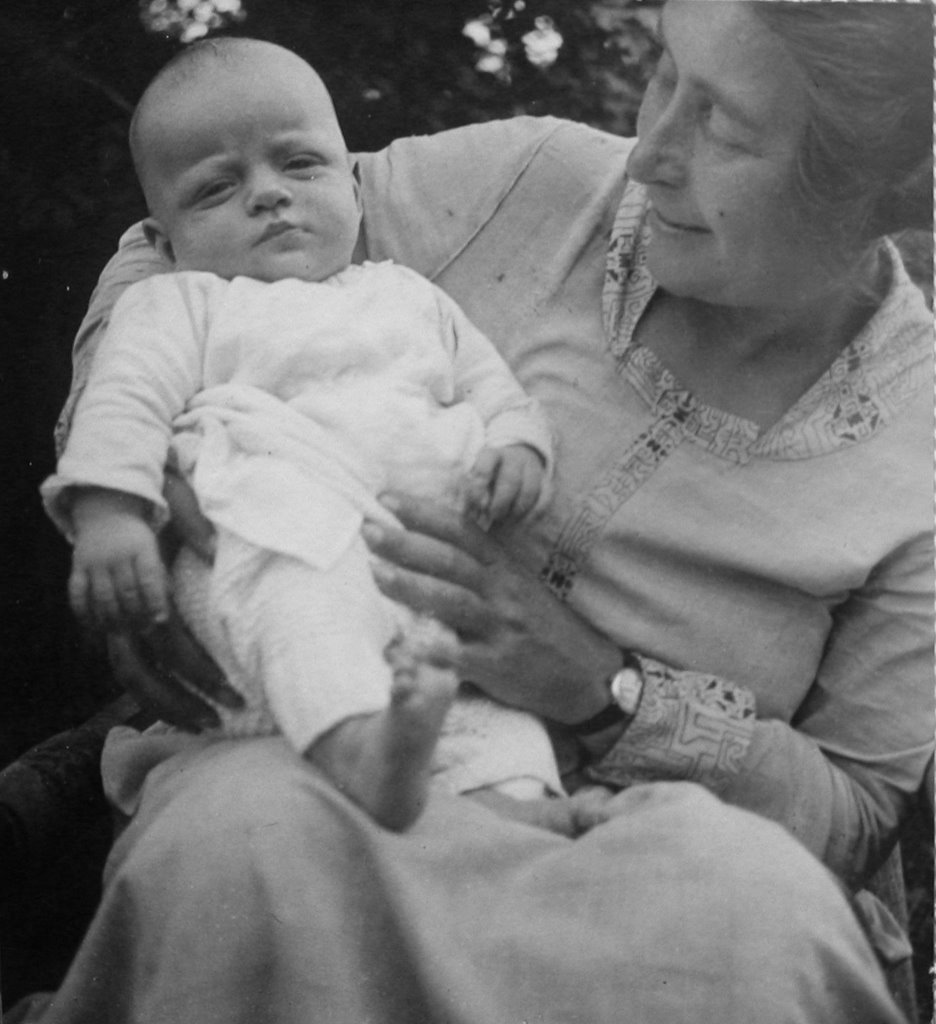
My mother Agnes and her sister Eva moved together after Agnes’ fiancé died of the Spanish flu in 1918. They were in their early thirties, quite good- looking, intelligent, and well educated. Agnes was the youngest but the most outgoing. She was counted for the ‘man’ in the house; the one who did the repairs and took care of practical things. She was a chemical engineer and worked as amanuensis at the Technical University of Denmark where she also taught chemistry for the entrance examination. Eva was a schoolteacher, not at all introverted but a little more in the background. They were well matched and it was extremely rare that they had an argument. When it happened it had the effect of an earthquake on me; the very foundation of my life seemed to crumble. But it did not even happen once a year. They had great sisterly affection for each other and had the same outlook on life. Both were freethinkers, open-minded for their time. During the years before I was born, in 1925, they had love affairs without being promiscuous. Eva would never tell me who her lovers had been, but I knew about two lovers that my mother had had after the death of her fiancé; both of them married men. The first was her boss at the Institute of Physical Chemistry, professor Brønsted; the second was my father.
She became pregnant in the summer of 1924. At that time it was rare, and generally looked down upon, for a single woman to be with child, but for my mother it was a source of happiness. She was not pining for a man, but to have a child was the fulfillment of her life, and she was in a position to take care of it. She went to her family and friends and told them all, and only her elderly aunt Johanne was less than positive about it.
The birth was not easy. My mother was then 38, and they had to use forceps to drag me out. But out I came, all in one piece; only mother had some complications and was not able to breast-feed.
Eva and Agnes had an apartment in the inner city of Copenhagen, near Kongens Nytorv, and here we stayed with our housekeeper miss Thomsen, or Totte, as I named her. Here I lived my first four years, and a few images have stayed in my memory. From the outings in Kongens Have, I remember holding my hand out of the baby carriage and letting the long grass by the side of the path slide in a steady stream under my hand, escape between my fingers, and flick back into an upright position.
And I recall the carpet sweeper, a contraption used much like a vacuum cleaner, but consisting of two rotating brushes in a casing. On this casing I stood, its vibrations tickling up through my legs, while I held on to the swaying handle as Totte pushed me back and forth over the red Afghan rug in the living room. The carpet sweeper was stored in a nook off the long dark hallway leading to the kitchen, next to the door to the toilet, whose pane of frosted glass let in a pale, comforting light. In this nook I took refuge on my way to the kitchen, generating here the courage to traverse the second half of the darkness.
Once, at night, there was a fire in the house just across the narrow street from our house, and I remember the heat and the excitement as I sat on my mother’s arm by the window.
She became pregnant in the summer of 1924. At that time it was rare, and generally looked down upon, for a single woman to be with child, but for my mother it was a source of happiness. She was not pining for a man, but to have a child was the fulfillment of her life, and she was in a position to take care of it. She went to her family and friends and told them all, and only her elderly aunt Johanne was less than positive about it.
The birth was not easy. My mother was then 38, and they had to use forceps to drag me out. But out I came, all in one piece; only mother had some complications and was not able to breast-feed.
Eva and Agnes had an apartment in the inner city of Copenhagen, near Kongens Nytorv, and here we stayed with our housekeeper miss Thomsen, or Totte, as I named her. Here I lived my first four years, and a few images have stayed in my memory. From the outings in Kongens Have, I remember holding my hand out of the baby carriage and letting the long grass by the side of the path slide in a steady stream under my hand, escape between my fingers, and flick back into an upright position.
And I recall the carpet sweeper, a contraption used much like a vacuum cleaner, but consisting of two rotating brushes in a casing. On this casing I stood, its vibrations tickling up through my legs, while I held on to the swaying handle as Totte pushed me back and forth over the red Afghan rug in the living room. The carpet sweeper was stored in a nook off the long dark hallway leading to the kitchen, next to the door to the toilet, whose pane of frosted glass let in a pale, comforting light. In this nook I took refuge on my way to the kitchen, generating here the courage to traverse the second half of the darkness.
Once, at night, there was a fire in the house just across the narrow street from our house, and I remember the heat and the excitement as I sat on my mother’s arm by the window.
Subscribe to:
Posts (Atom)